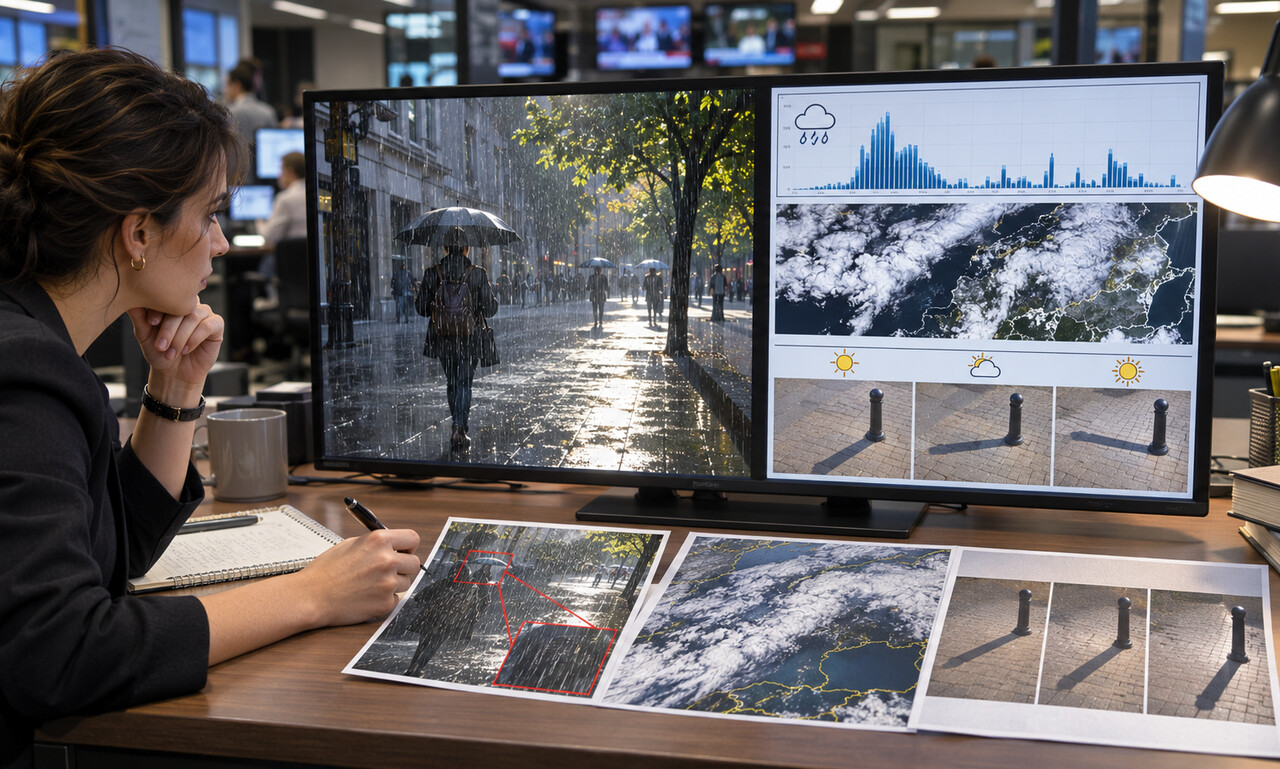
Weather is a useful consistency check when a photograph or video is attached to a specific place and time. Visible rain, snow cover, cloud conditions or strong sunlight can be compared with observations recorded near the claimed location.
A match does not prove the claim by itself. Weather can repeat, and conditions may vary across a city or between a station and the exact scene. A dry street does not necessarily contradict nearby rain if the shower was brief or highly local.
Look for combinations rather than one feature. Cloud cover, temperature-dependent clothing, wet surfaces, wind direction, vegetation and the length of shadows may support the same window. Each clue has different limits and should be weighted accordingly.
Historical weather reports also have gaps and different levels of precision. Note the station’s distance, observation time and whether the record describes an hourly measurement, daily summary or forecast rather than what actually occurred.
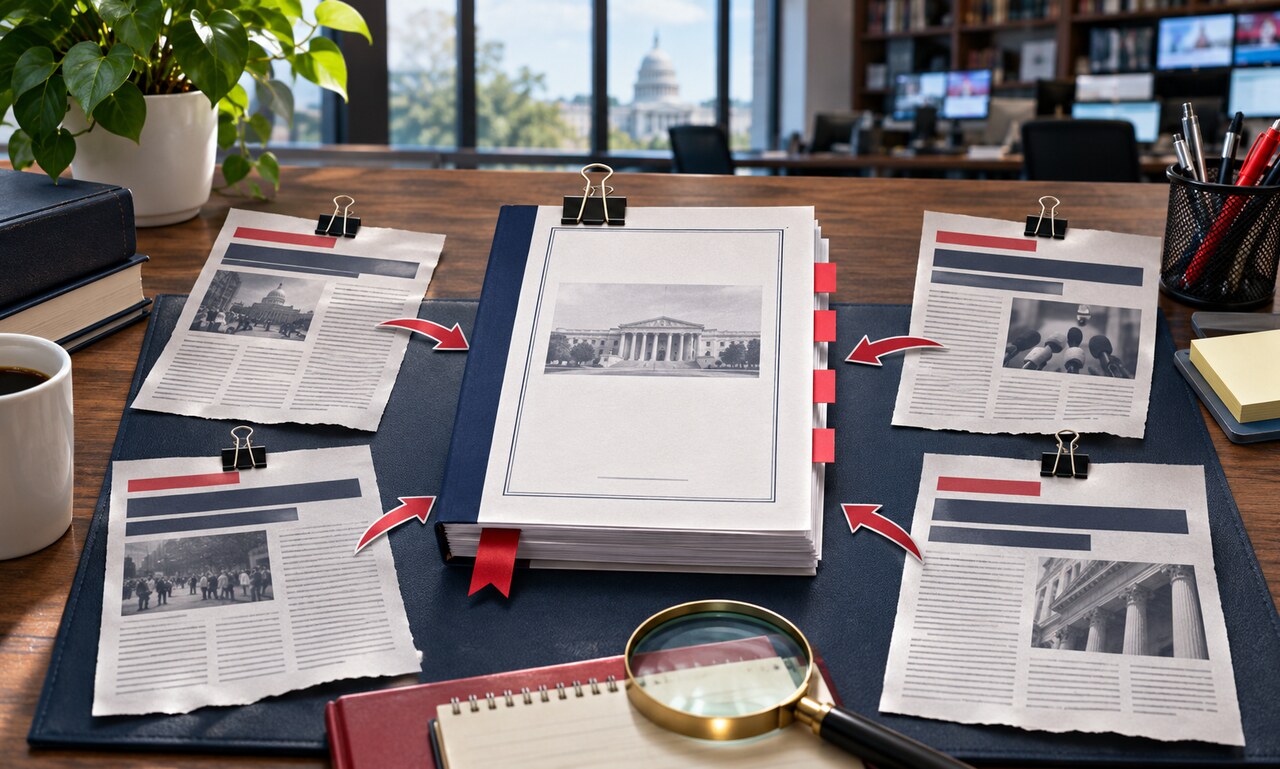
Use weather to narrow possibilities and identify contradictions, then combine it with timestamps, landmarks, source history and other recordings. Several independent forms of evidence can support timing more reliably than a single cloud or rain report.
Original educational commentary by Breaking Click. This explainer is designed to help readers evaluate information more carefully.