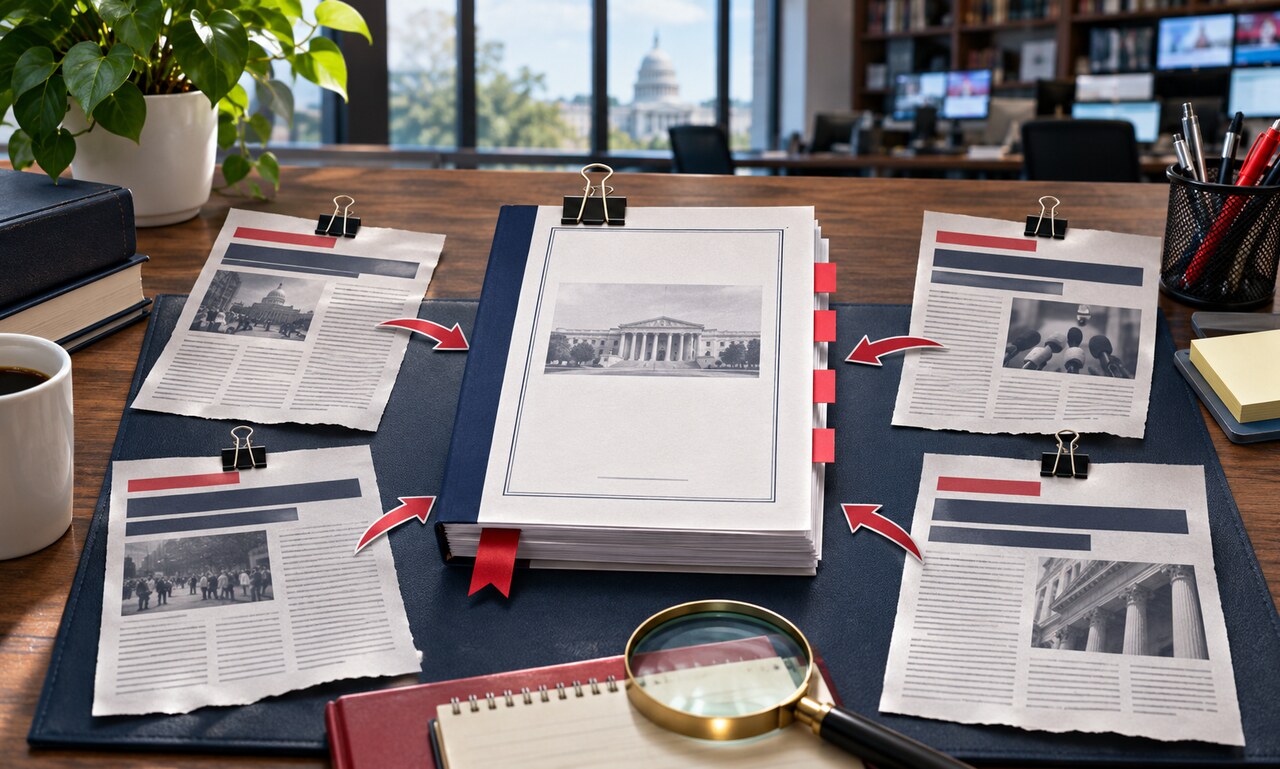
Many headlines summarize something that exists elsewhere: a court decision, public report, research paper, budget, speech or regulatory filing. The article can provide context, but the primary document lets you see the evidence before it was compressed into a headline.
Look for a direct link in the story. If there is none, search the exact title, agency, author or case number rather than the headline wording. Official websites, court databases, journal pages and institutional archives are stronger starting points than copies uploaded without a clear origin.
Confirm that you have the right version. Drafts, summaries, press releases and final reports can look similar while containing important differences. Check the date, issuing body, page count and any words such as revised, preliminary or executive summary. A news article may have relied on an earlier release.
Read the section that supports the headline, then widen the frame. Definitions, methods, footnotes and limitations often explain what the main number does and does not cover. A quotation in a judgment may describe an argument the court later rejects; a figure in a report may apply only to one year or group.
The primary document does not make interpretation automatic. Technical language may still require expert explanation, and institutions can frame their own work strategically. Use the original to anchor the facts, then compare how multiple careful reports interpret its significance.
Original educational commentary by Breaking Click. This explainer is designed to help readers evaluate information more carefully.