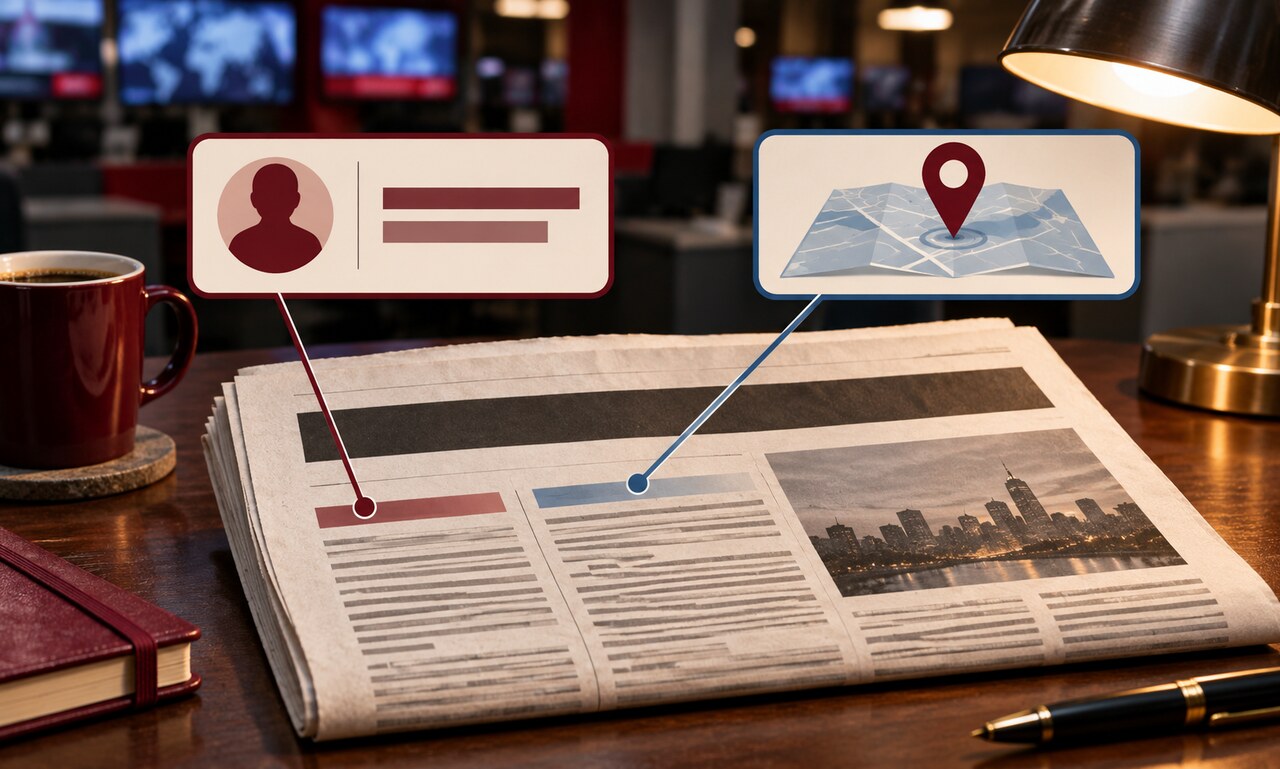
A byline names the journalist or journalists responsible for a story. A dateline traditionally appears at the beginning and identifies the place from which the report was filed. The two elements answer different questions, even though both help readers understand how the work was produced.
The byline establishes authorship and accountability. Some publications also add short contributor notes when reporting, photography or research came from other people. Staff labels and news-service credits can signal that the work belongs to a team or a wire organization rather than one named writer.
The dateline offers geographic context. In traditional use, the named reporter was present in that location and gathered substantial information there. Publication practices vary, and remote reporting has complicated the convention. A location should not imply firsthand presence when the story was assembled elsewhere.
Neither label proves that every detail is correct. A named reporter can make an error, and a local dateline does not reveal every source or method. Still, these details help a reader ask useful questions: Was the journalist on the scene? Did another bureau contribute? Is the report original or republished?
Clear credit strengthens trust when it accurately reflects the work. Publications should explain unusual labels and distinguish reporting locations from the location of the event itself. Readers deserve a simple, honest account of who produced the story and from where.
Original educational commentary by Breaking Click. This explainer is designed to help readers evaluate information more carefully.