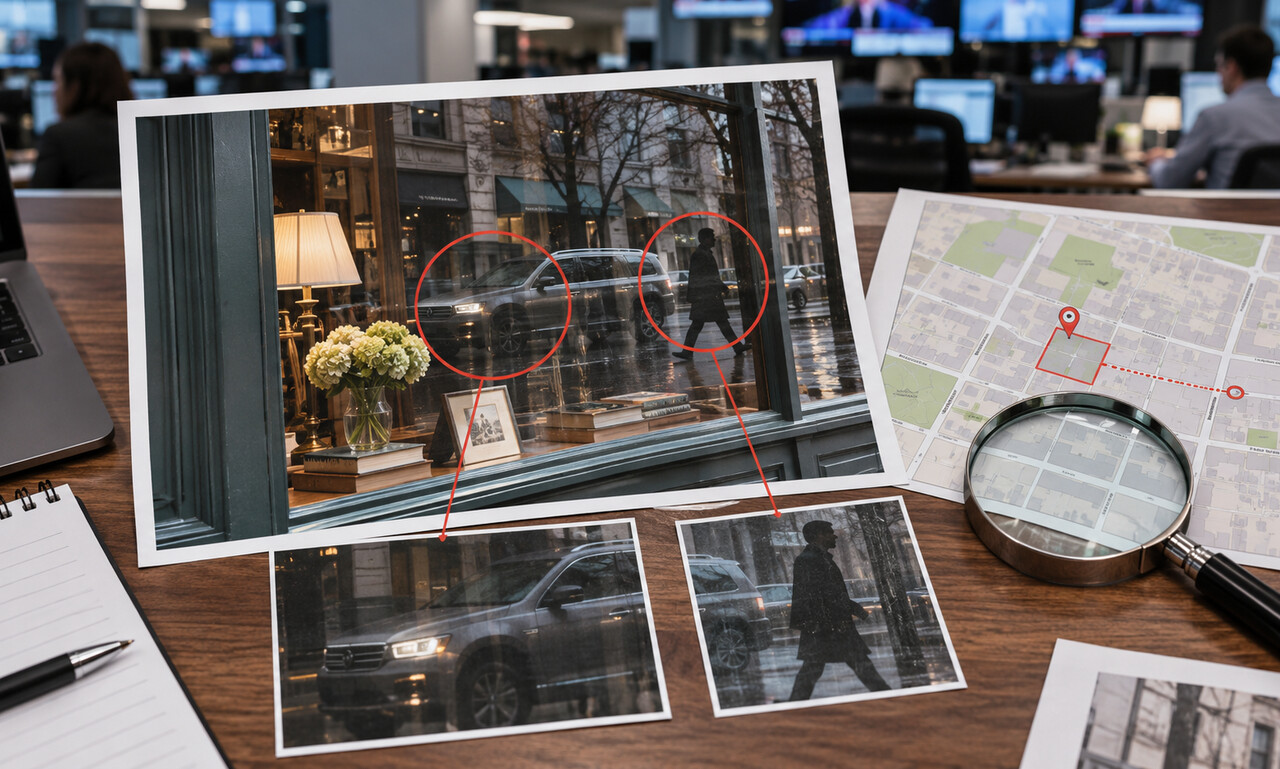
A photograph records more than the objects facing the camera. Windows, mirrors, water and polished metal can contain a second view of the scene, sometimes revealing a person, vehicle, sign or light source outside the direct frame.
Reflections reverse direction and distort distance depending on the surface angle. A reflected object may appear beside something it was actually behind, and curved glass can stretch shapes. Treat the reflection as a clue to reconstruct, not a literal map.
Compare fixed features in the reflection with the visible environment. Building edges, road markings and light positions can help estimate the reflecting surface and viewing angle. A second photograph from nearby may show what occupied the hidden area.
Compression, glare and layered glass can create ghost images that resemble additional objects. Look for repeated edges and changes in brightness before declaring that a faint shape represents a person or event.
When a reflection matters to a conclusion, show the original frame and explain the interpretation step by step. It can expand the available evidence, but uncertainty about angle, depth and image quality should remain visible.
Original educational commentary by Breaking Click. This explainer is designed to help readers evaluate information more carefully.