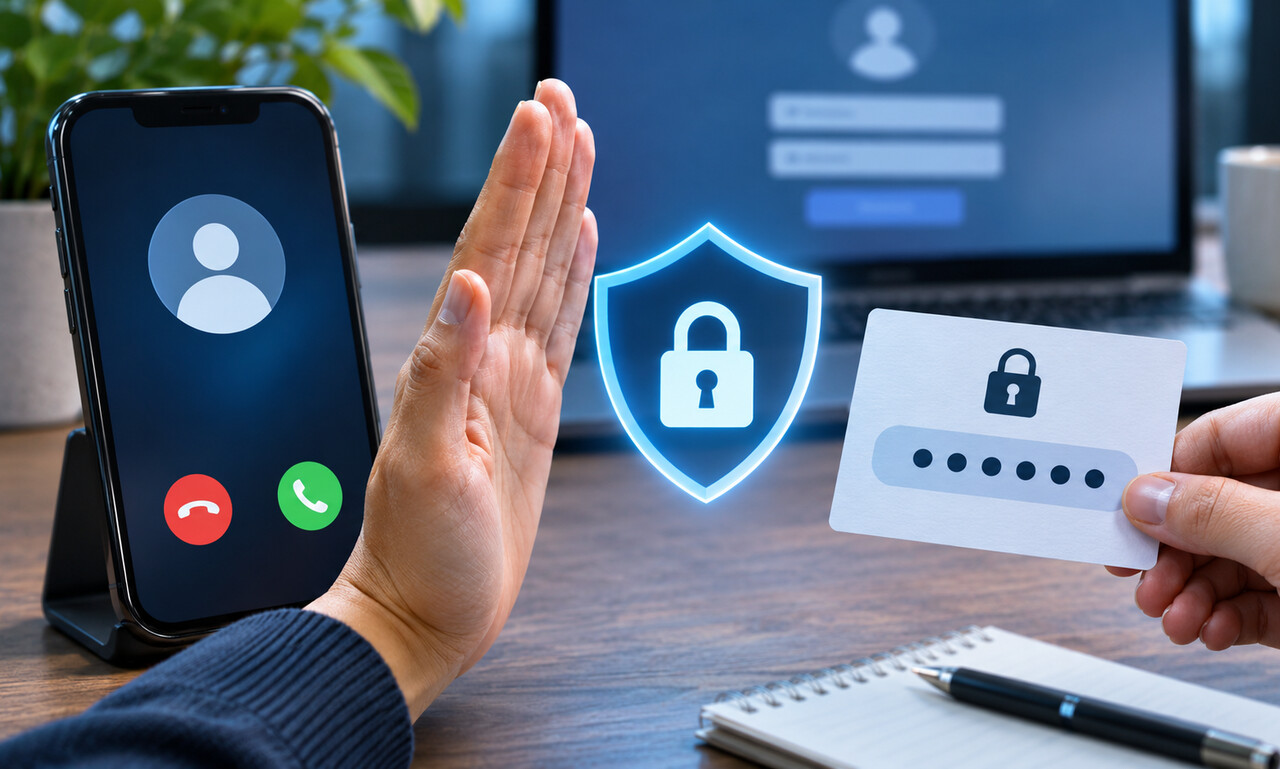
One-time codes are designed to confirm that the person signing in has access to a trusted phone, email address or authenticator. They are short-lived, but during that window they can unlock an account or approve a sensitive change.
A scammer may already know a password, account name or personal detail. By starting a login or recovery process, the scammer causes a real service to send you a genuine code. The caller then invents a reason for you to read it aloud.
Legitimate support staff should not need the code that authorizes your sign-in. Warnings in the message often state this directly. Do not rely on caller identification because phone numbers and display names can be imitated.
End the contact and open the service through its official app, saved bookmark or a number printed on a trusted statement. Review recent sessions, change a compromised password and sign out unfamiliar devices. If the code arrived unexpectedly, someone may be testing access already.
Use an authenticator or security key when available, protect the email account used for recovery and never approve a prompt you did not initiate. A one-time code is a key for one transaction; sharing it gives away that transaction.
Original educational commentary by Breaking Click. This explainer is designed to help readers evaluate information more carefully.