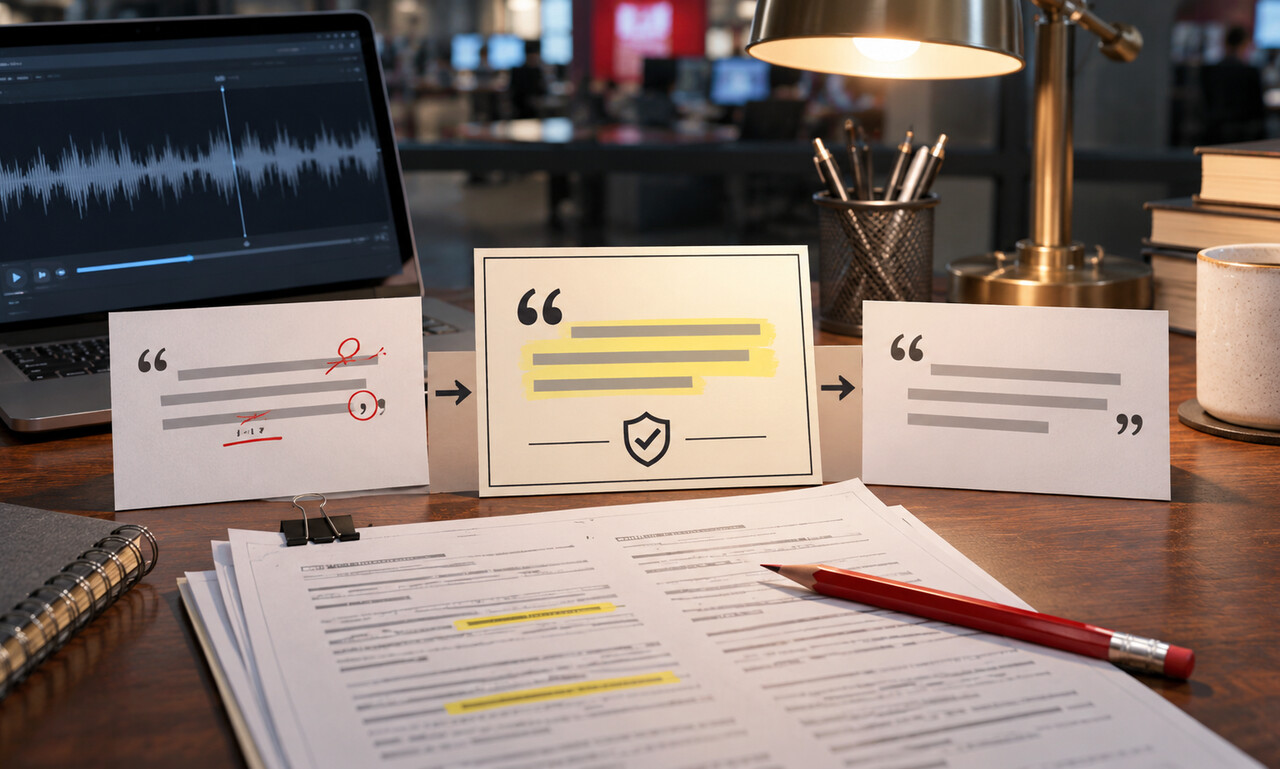
Spoken language includes pauses, repetitions, false starts and filler that can make a transcript difficult to read. Editors sometimes remove these features when they add no meaning, but quotation marks still promise that the published words faithfully represent the speaker.
An edit becomes risky when it changes confidence or emphasis. Removing “I think,” “maybe” or a hesitation can make a cautious answer sound certain. Joining sentences from different parts of an interview can create a connection the speaker did not make.
Grammar presents another boundary. Correcting every error may erase voice or hide how the answer was delivered, while preserving every stumble can unfairly make someone appear confused. Paraphrase is often better when substantial restructuring is needed.
Ellipses and brackets can show limited changes, but they should not be used to assemble a new argument. Keep the original recording and transcript so disputed wording can be checked. Translated quotations deserve an additional review for tone and context.
The test is not merely whether every remaining word was spoken. Ask whether a reasonable listener would recognize the same meaning, qualification and sequence. Readability matters, but accuracy controls the edit.
Original educational commentary by Breaking Click. This explainer is designed to help readers evaluate information more carefully.