Backup codes are designed for the moment when a phone, security key or authenticator app is unavailable. That convenience also makes them sensitive: anyone holding a valid unused code may be able to complete a sign-in.
Do not leave the only copy in the same phone or laptop that holds your password. A lost or compromised device could expose both parts of the login process at once. Store codes separately from everyday credentials.
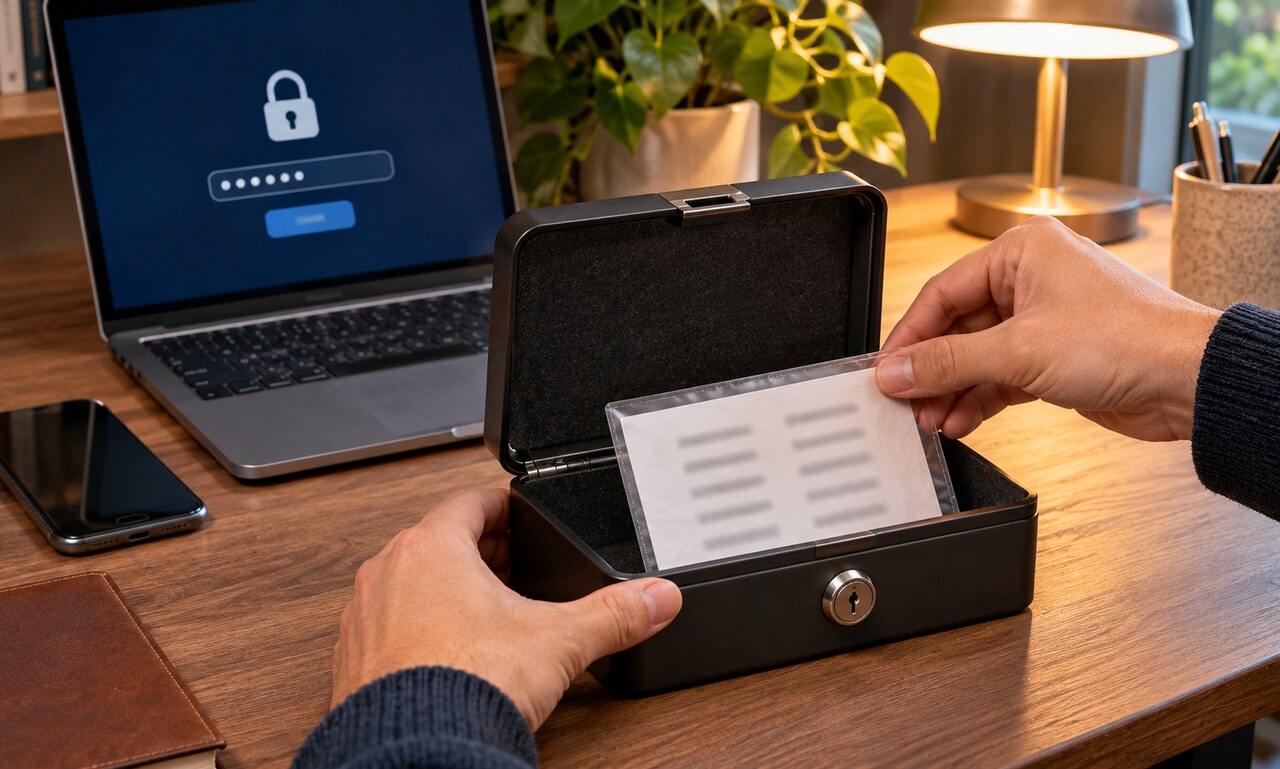
A printed copy in a secure physical location can be practical. An encrypted password manager is another option when its recovery plan is independent from the account the codes protect. Plain screenshots and unencrypted notes are easier to copy or sync unexpectedly.
Most services allow each code to be used once. Mark a used code without revealing the remaining ones, and generate a new set if the list may have been viewed, photographed or shared. Creating a new set usually invalidates the old one.
Review backup codes whenever you change phones, lose a device or update account recovery methods. They are emergency credentials, not harmless reference numbers.