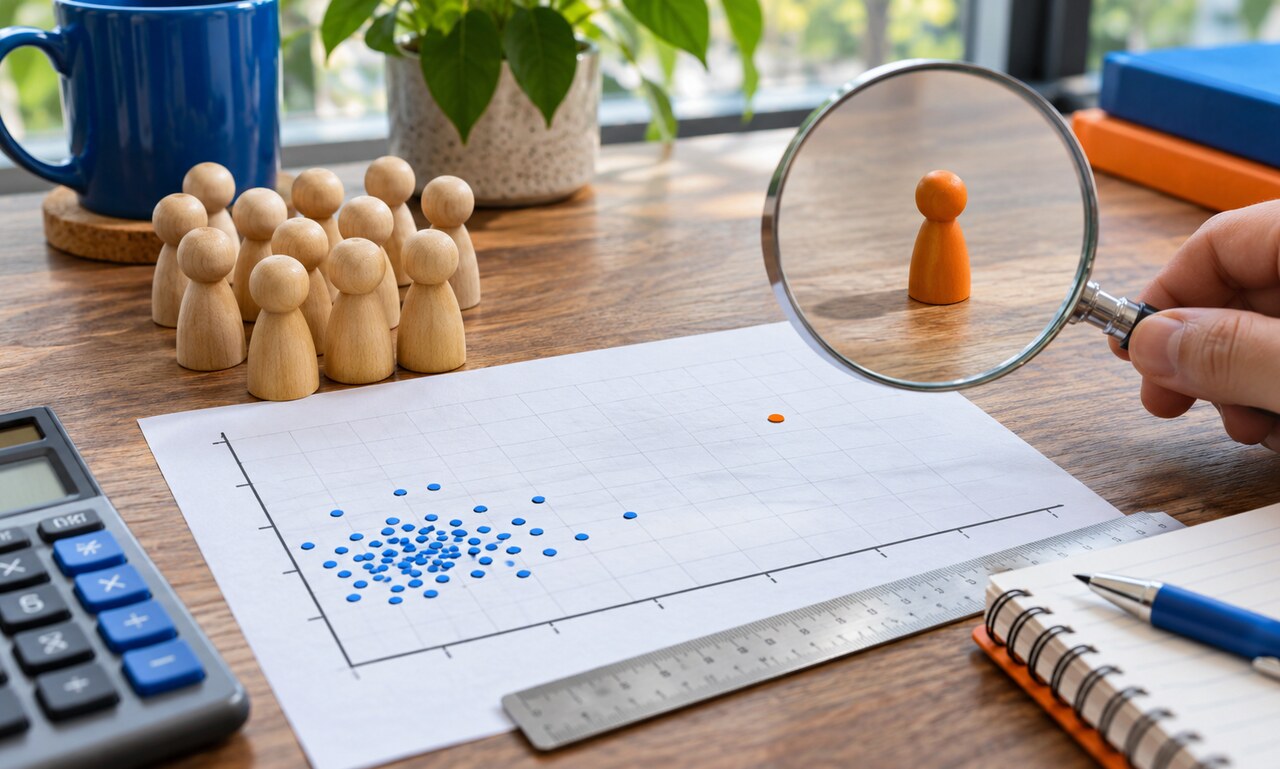
An outlier is a value that sits far from most of the data. It may pull an average, stretch a chart or change a model. That influence makes outliers easy to blame when a result looks untidy, but unusual values are not automatically wrong.
Begin with verification. Check for typing errors, mixed units, duplicate records, faulty sensors and impossible dates. Compare the value with the original source. Correcting a documented mistake is different from deleting a valid observation because it changes the conclusion.
A real outlier can identify a rare event, a distinct population or a failure that the typical case hides. In safety data, the most extreme incident may be the one that deserves the closest attention. In medicine or public services, it may reveal who is not served by the usual pattern.
Use methods that show the effect. Report the result with and without the outlier, use a median or a robust model when appropriate and explain any exclusion rule. The rule should be chosen before seeing which version produces the preferred answer.
Outliers are questions, not trash. Investigate why the value is different, document the decision and keep the original record. The point farthest from the cluster may be noise—or the beginning of the story.
Original educational commentary by Breaking Click. This explainer is designed to help readers evaluate information more carefully.