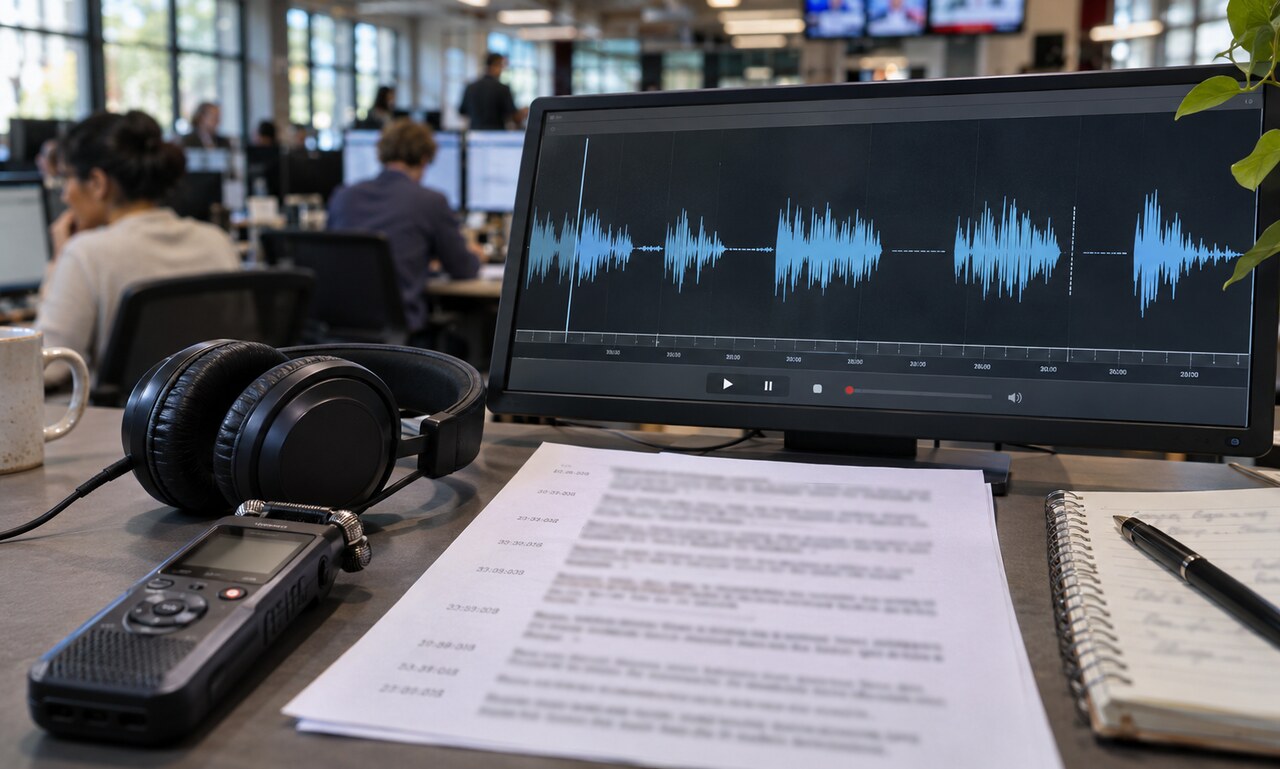
A transcript converts speech into text. It helps readers search a long interview, follow a hearing or quote a recording. The convenience can make the written version feel complete even when important parts of the original exchange are missing.
Tone can change meaning. A sentence spoken as a question, joke or correction may look firm on the page. Pauses, interruptions and emphasis can also show hesitation or disagreement. A clean transcript often removes the disorder that helps listeners understand the moment.
Check how the transcript was produced. Automated and human transcription can both mishear names, numbers and unfamiliar terms. Labels such as “inaudible,” an ellipsis or a bracketed note may mark missing material, but silent omissions are harder to detect.
Compare important passages with the recording. Note whether edits joined separate sentences, removed a question or cut material before and after the quotation. If only a transcript is available, say so and avoid claiming details that depend on vocal delivery.
A transcript is a useful representation, not the event itself. Quote it accurately, preserve meaningful context and return to the audio or video when the distinction matters. The written record should guide verification, not replace it.
Original educational commentary by Breaking Click. This explainer is designed to help readers evaluate information more carefully.