Web archives preserve valuable evidence of what a public page looked like at a recorded time. A snapshot can confirm that wording, an image or a document was available then, even after the live page has changed or disappeared.
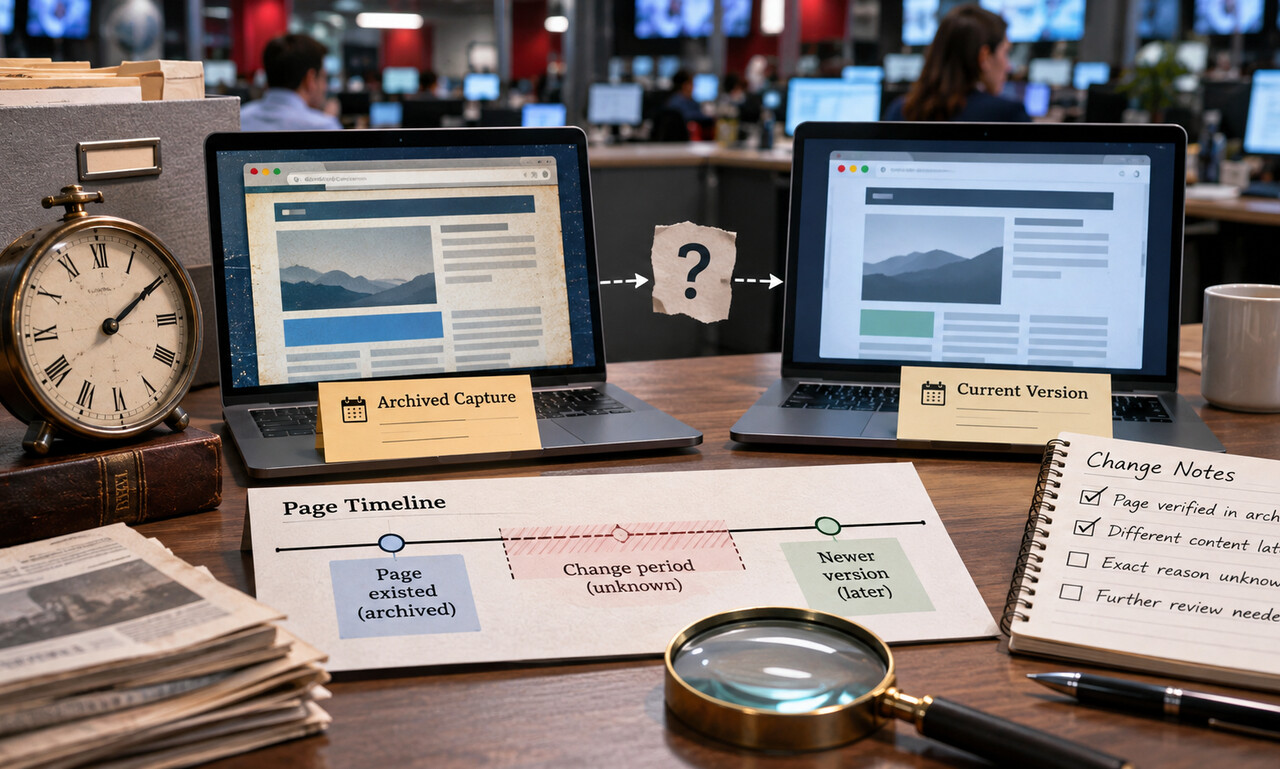
The archive is not a continuous recording. Crawlers visit at intervals, some resources fail to load and pages can block capture. A difference between two snapshots may have occurred at any point inside the gap rather than on either displayed date.
A changed page does not reveal motive. The edit may reflect a correction, routine update, redesign, legal request or technical migration. Identifying the change is separate from establishing who made it and why.
Open the archived page rather than relying on a search preview. Check whether images, scripts and linked documents were saved, and compare multiple captures. Page source, revision histories and public statements may provide additional context.
Report precisely what the archive supports: the page contained one version by a certain capture and another by a later capture. Treat the timing and reason for the change as separate questions requiring separate evidence.
Original educational commentary by Breaking Click. This explainer is designed to help readers evaluate information more carefully.