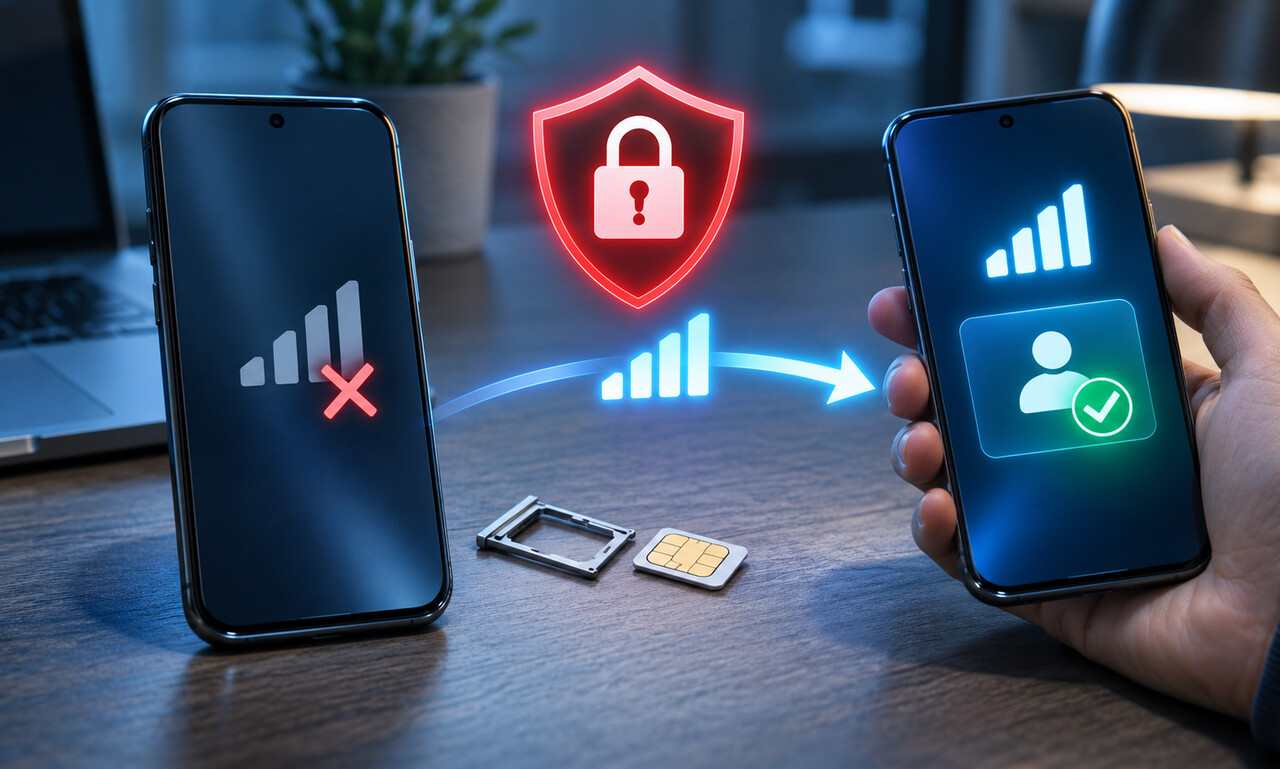
A phone number is controlled through the mobile carrier, not permanently tied to the handset in your pocket. In a SIM-swap attack, someone convinces the carrier to activate that number on a different SIM or account.
The first visible sign may be sudden loss of calls, texts and mobile data while nearby phones still work. At the same time, the attacker may request password resets or receive sign-in codes sent by text. The physical phone does not need to be stolen.
Contact the carrier through a trusted number as soon as unexplained service loss appears. Ask whether the SIM or account was changed, restore control and add a transfer lock or account PIN. Then secure email, banking and other high-value accounts that rely on the number.
Text-message verification is better than no second step, but an authenticator app or hardware security key is usually less exposed to phone-number takeover. Recovery settings should not depend on one channel alone, and carrier account credentials should be unique.
Be cautious with public personal details that could help someone impersonate you to support staff. A strong device passcode protects the handset; carrier controls protect the number. Both are needed because they guard different parts of the account chain.
Original educational commentary by Breaking Click. This explainer is designed to help readers evaluate information more carefully.