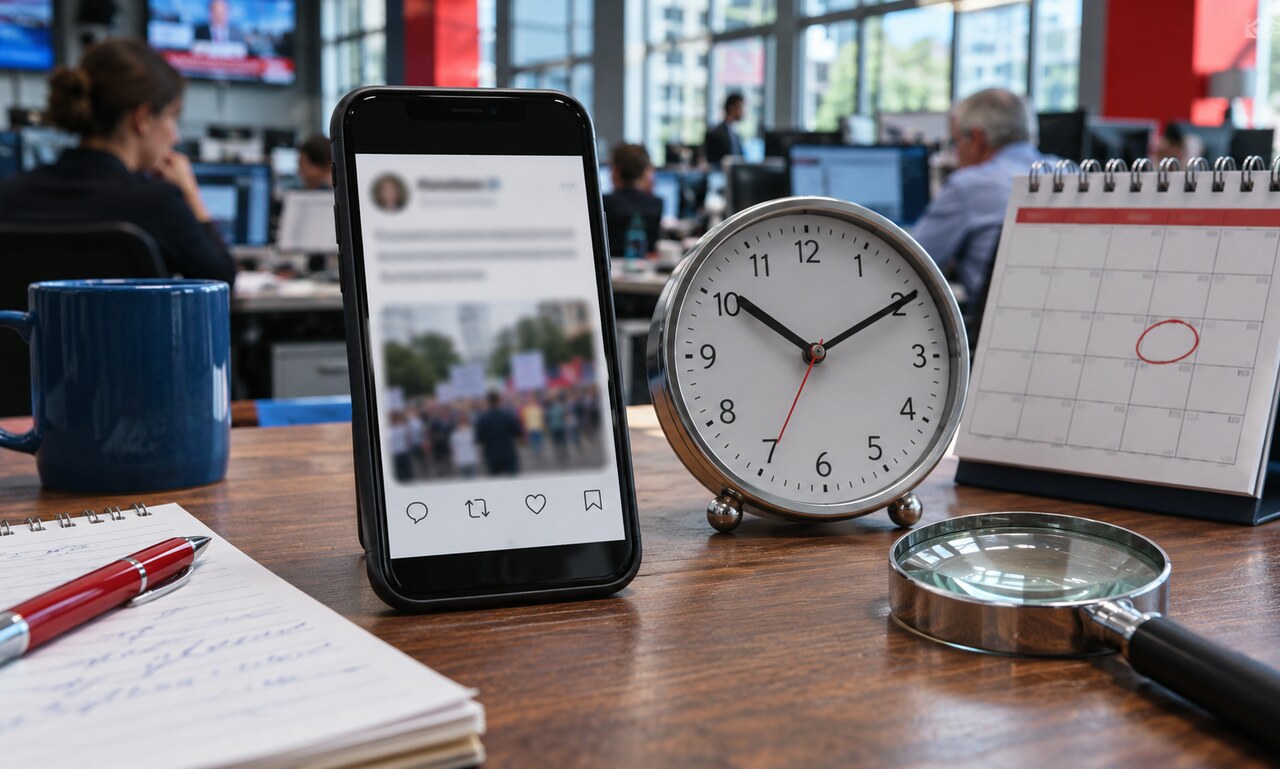
A post can be genuine and still create a false impression when its timing is unclear. An image, warning or eyewitness account from last month may be recirculated during a new event. The words did not change, but the context around them did.
Start with the visible date and time. Some platforms show a relative label such as “two hours ago,” which becomes useless in an undated screenshot. Open the original post when possible and note the time zone, especially when the event crosses regional or national boundaries.
Then compare the post with the sequence of events. A statement published before an official announcement cannot be treated as a response to it. A video uploaded after an incident may still have been recorded earlier. Publication time and recording time answer different questions.
Look for matching details in archived pages, replies, news reports and official records. These clues can establish when the post first appeared and what people knew at that moment. A later edit or repost should not silently replace the original timeline.
When the timing cannot be confirmed, say so. A careful description such as “the undated image began circulating on Thursday” separates what can be observed from what remains uncertain. Time is part of the evidence, not a decorative detail.
Original educational commentary by Breaking Click. This explainer is designed to help readers evaluate information more carefully.