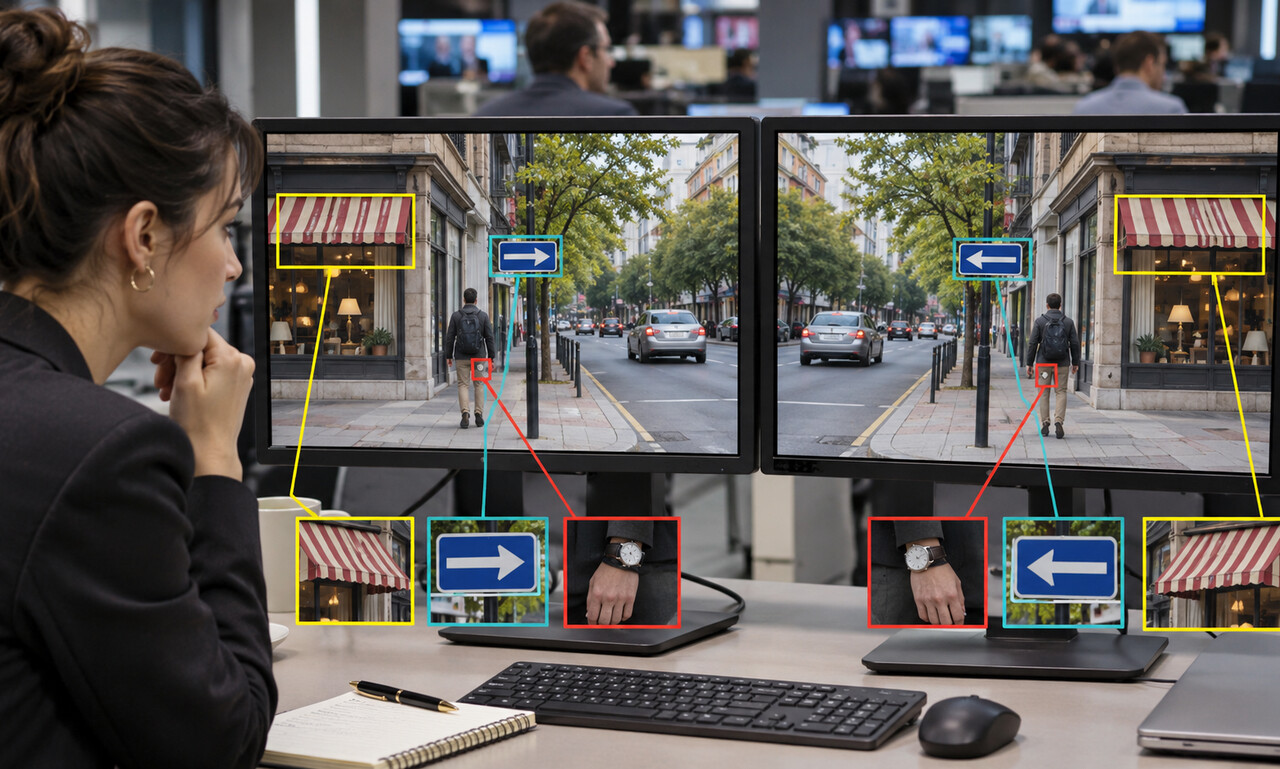
Phones, editing tools and social platforms can reverse a photograph or video horizontally. The people and action remain recognizable, but every left-right clue changes position. That simple transformation can send a location check in the wrong direction.
Written signs are often the fastest clue because letters appear backward, but text may be blurred, cropped or corrected separately. Look also at which side of the road vehicles use, the placement of doors and landmarks, watch faces, uniforms and distinctive features on a person’s clothing.
A front-facing camera preview may show a mirror view while the saved file uses the normal orientation, and some apps preserve the reflected version. This means a flip is not automatically evidence of deception. The important task is to establish which orientation matches the physical scene.
Compare the image with an independent reference such as a street photograph, building plan or another recording from the same location. Rotate nothing else while testing a horizontal flip. If several fixed features align only after reversal, the orientation has probably changed.
Report the adjustment clearly when it affects the conclusion. A mirrored image can still document a real event, but directional claims drawn from it should wait until the original orientation is confirmed.
Original educational commentary by Breaking Click. This explainer is designed to help readers evaluate information more carefully.