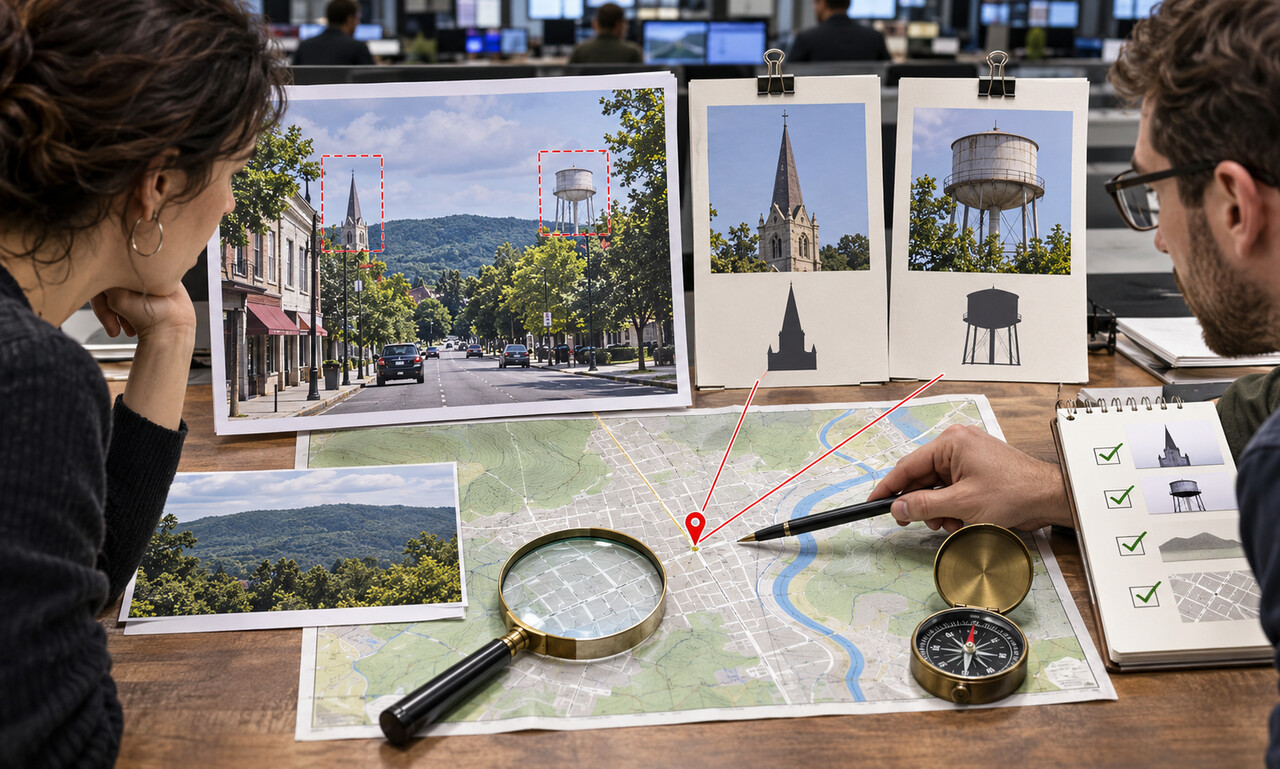
A distinctive tower, mountain or storefront can suggest where an image was captured, but a single resemblance is vulnerable to coincidence. Similar architecture, road layouts and terrain appear across many cities and regions.
Begin with stable features: the shape and spacing of buildings, road direction, intersections, utility lines, terrain and the position of permanent structures. Temporary details such as vehicles, posters and construction barriers can support a match but may change quickly.
Each clue should fit the same camera position. A building that matches on its own is not enough if the road bends the wrong way or a second landmark should appear but does not. Estimate the viewing direction and check how foreground and background features align.
Use sources created independently of the claim, such as maps, street-level imagery, satellite photographs and older local coverage. Seasonal changes, renovations and image dates can explain differences, while shadows and weather may help narrow timing without proving the location alone.
A confident conclusion rests on a cluster of consistent details and no major contradiction. Document the comparison so another reader can repeat it. Geolocation becomes stronger when several ordinary clues converge than when one dramatic landmark merely looks familiar.
Original educational commentary by Breaking Click. This explainer is designed to help readers evaluate information more carefully.