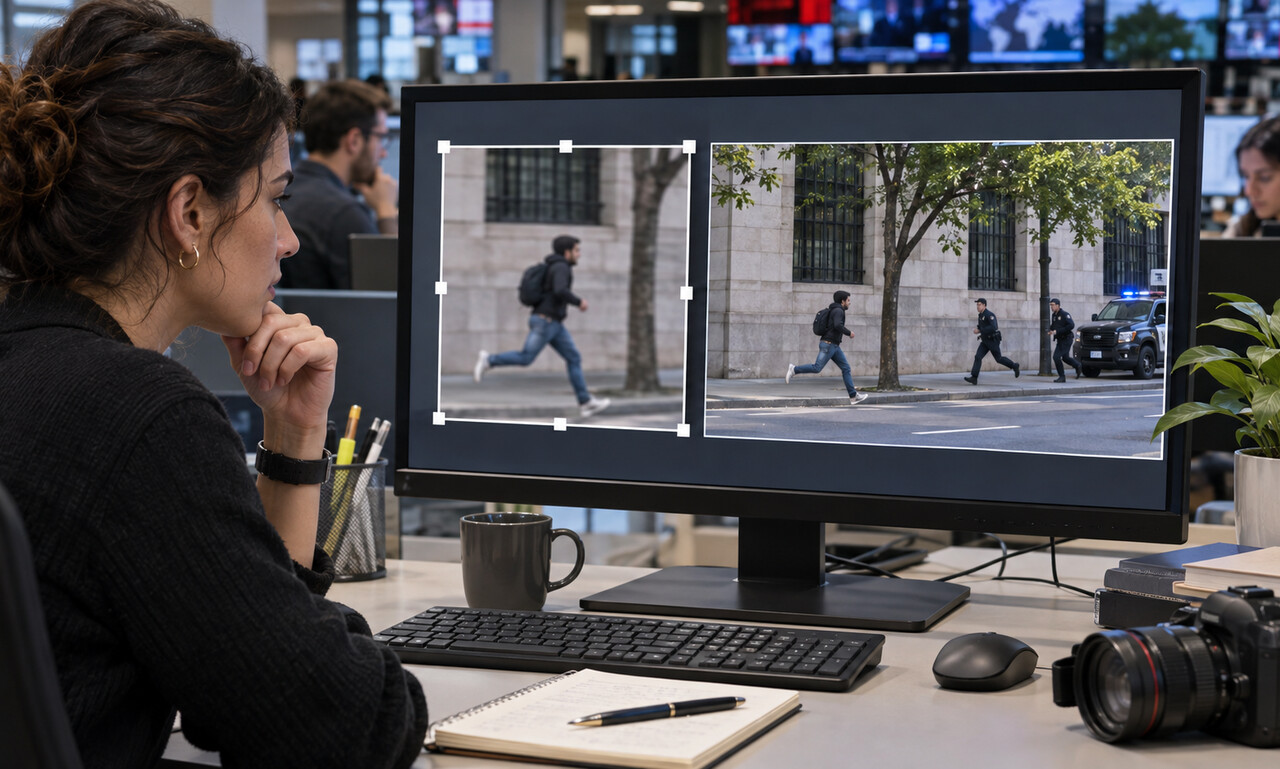
Video feels complete because it combines movement and sound, yet every frame has a boundary. A tight crop can remove a person giving instructions, an object that prompted a reaction or the wider crowd surrounding an encounter. What remains may be genuine without being representative.
Look for the original aspect ratio and the longest available upload. Reposted vertical clips often cut the sides from a horizontal recording, while zoomed versions may remove signs, landmarks or nearby activity. Black bars, soft edges and unusually large pixels can signal that a crop has been applied.
Sound sometimes extends beyond the picture. Voices, impacts or instructions may come from outside the frame, but audio alone cannot establish who produced them or where they were standing. A second camera angle can connect those sounds to the wider scene.
Compare shadows, fixed objects and the movement of people who enter or leave the shot. Search for other recordings from the same time and location. Even a few seconds before the opening frame or after the closing one can change whether an action appears unprovoked, coordinated or isolated.
Describe only what the visible clip supports. If important space remains unseen, say so. The edge of a frame is a limit on the evidence, not proof that nothing relevant happened beyond it.
Original educational commentary by Breaking Click. This explainer is designed to help readers evaluate information more carefully.