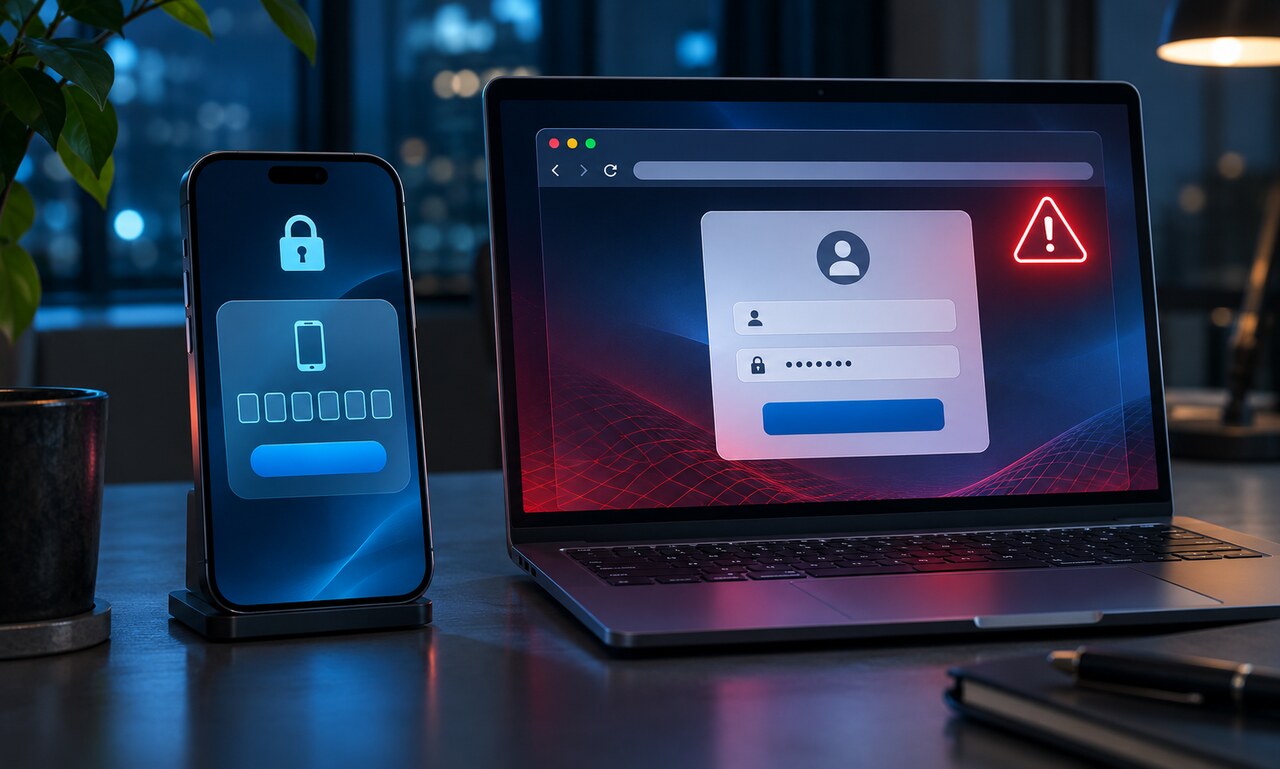
Two-factor authentication adds a second requirement after a password and blocks many common account takeovers. It is an important protection, but not every method resists every attack. A convincing fake sign-in page can ask for both the password and the temporary code.
Attackers may relay the stolen details to the real service immediately and create a session before the code expires. Repeated push notifications create another risk: a tired or confused user may approve one simply to stop the prompts. An unexpected request should be denied, not treated as a routine interruption.
Security keys and passkeys are stronger against phishing because they verify the website itself, not only a code typed by the user. Authenticator apps are generally preferable to text messages when stronger options are unavailable, though they still require attention to the page requesting the code.
Recovery paths matter too. An account protected by a strong second factor can still be weakened by an old phone number, insecure email account or easily guessed recovery questions. Review backup methods and remove devices or sessions you no longer use.
Turn on the strongest option each service supports, then slow down at sign-in. Check the address, open important sites from a saved bookmark and never approve a prompt you did not begin. The second factor is a layer, not permission to ignore the first signs of a trap.
Original educational commentary by Breaking Click. This explainer is designed to help readers evaluate information more carefully.