Eyewitness video can bring viewers close to an event, but proximity is not the same as complete understanding. A short clip shows only what entered one camera frame during a limited period. It may document a real moment while leaving the cause, location, sequence and outcome uncertain.
Begin with the earliest version you can find. Reposts often remove the original caption, date, audio or image quality. The first uploader may offer useful context, but their description is still a claim to check. Save the direct link and note when the post appeared before the material is deleted or edited.
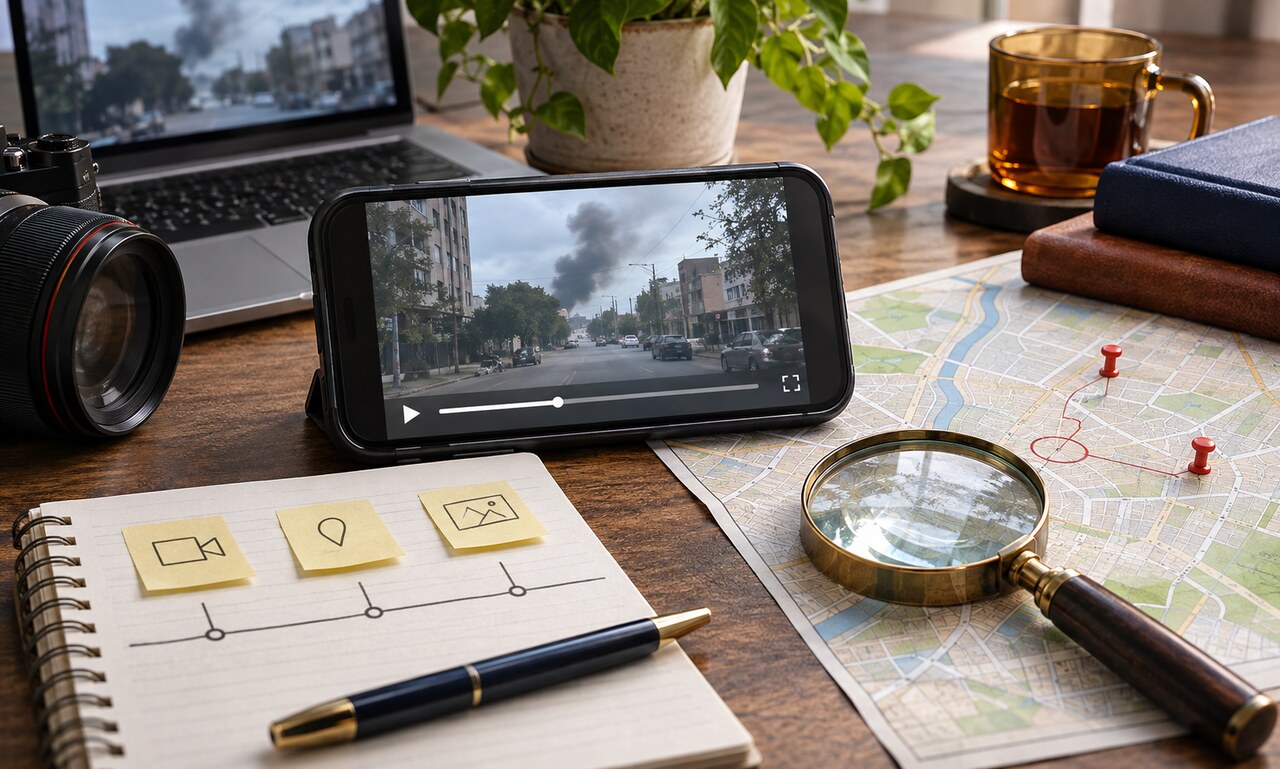
Study visible details without rushing to identify them. Road signs, storefronts, terrain, shadows, weather and distinctive buildings may help establish a location or time. Compare those details with maps, street-level photographs and reliable weather records. One matching feature is encouraging; several independent matches are stronger.
Listen carefully to the audio and look for cuts. A soundtrack can come from another clip, and an edit can remove the moments that explain what happened next. Search for other recordings from different angles. Shared landmarks, sounds or movements can help place the clips in the same sequence.
Describe only what the evidence supports. “This video shows smoke rising behind a building” is different from naming the cause of the smoke. Separating observation from interpretation makes the report more useful and allows later evidence to refine the story without turning an early guess into a false fact.
Original educational commentary by Breaking Click. This explainer is designed to help readers evaluate information more carefully.