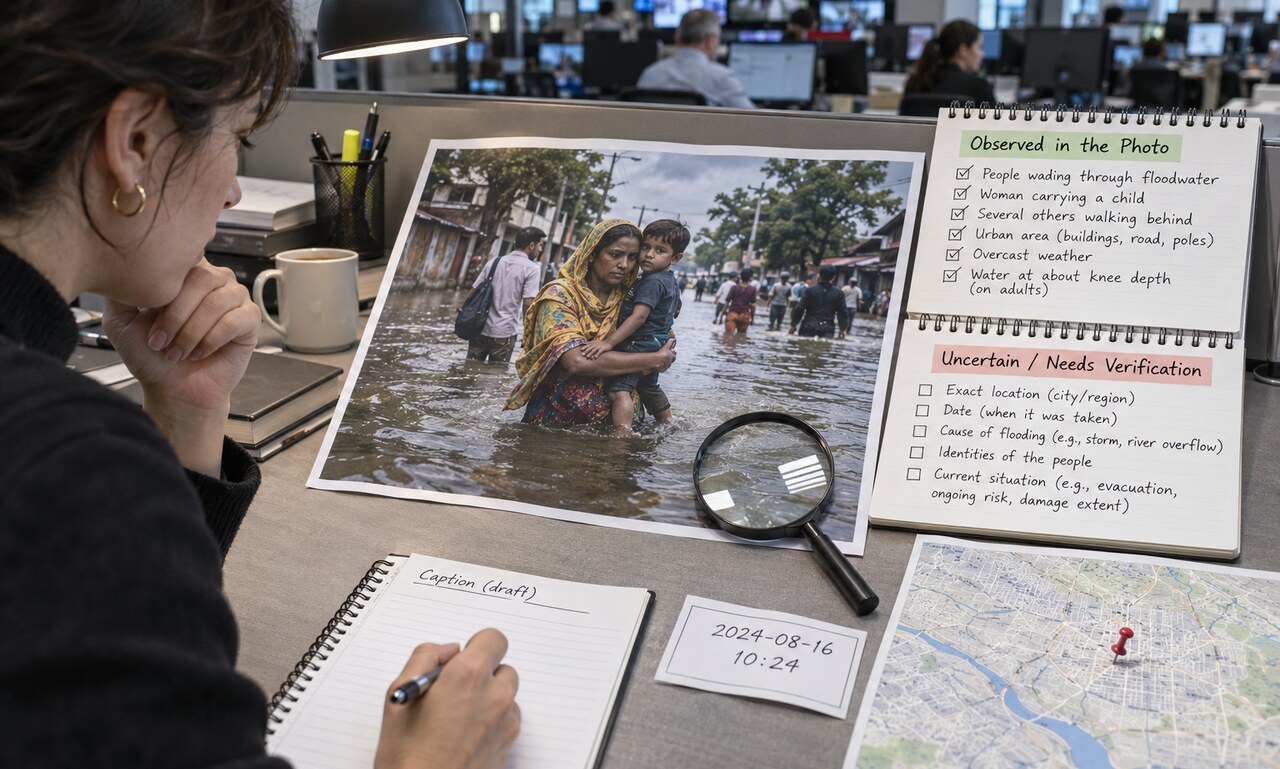
A caption guides the way readers interpret a photograph. It can add the date, location, identities and event that the frame alone cannot establish. Because it sits beside visual evidence, an unsupported caption can make a guess feel proven.
Begin with what is visible. A person may be standing beside a damaged building, holding a sign or moving through water. The image does not necessarily reveal why the person is there, who caused the damage or what happened immediately before and after the frame.
Verify names, places and times through the photographer, original file, assignment notes and independent records. If an identity or location remains uncertain, do not fill the gap with a likely answer. State the limitation or leave the detail out.
Use verbs carefully. “Attends,” “walks” and “speaks” may describe observable action; “supports,” “flees” and “celebrates” can claim motive or context. Those stronger words need evidence beyond appearance. The same care applies to labels such as protester, victim or suspect.
A useful caption tells readers what the photograph contributes without asking it to prove more than it can. Separate observation from verified context and keep inference clearly marked. Precision protects both the people in the frame and the credibility of the report.
Original educational commentary by Breaking Click. This explainer is designed to help readers evaluate information more carefully.