A leaked document can reveal information that an institution did not intend to make public. It can also be altered, incomplete, outdated or falsely described. The first question is not what the document appears to prove, but whether it is what the source claims it is.
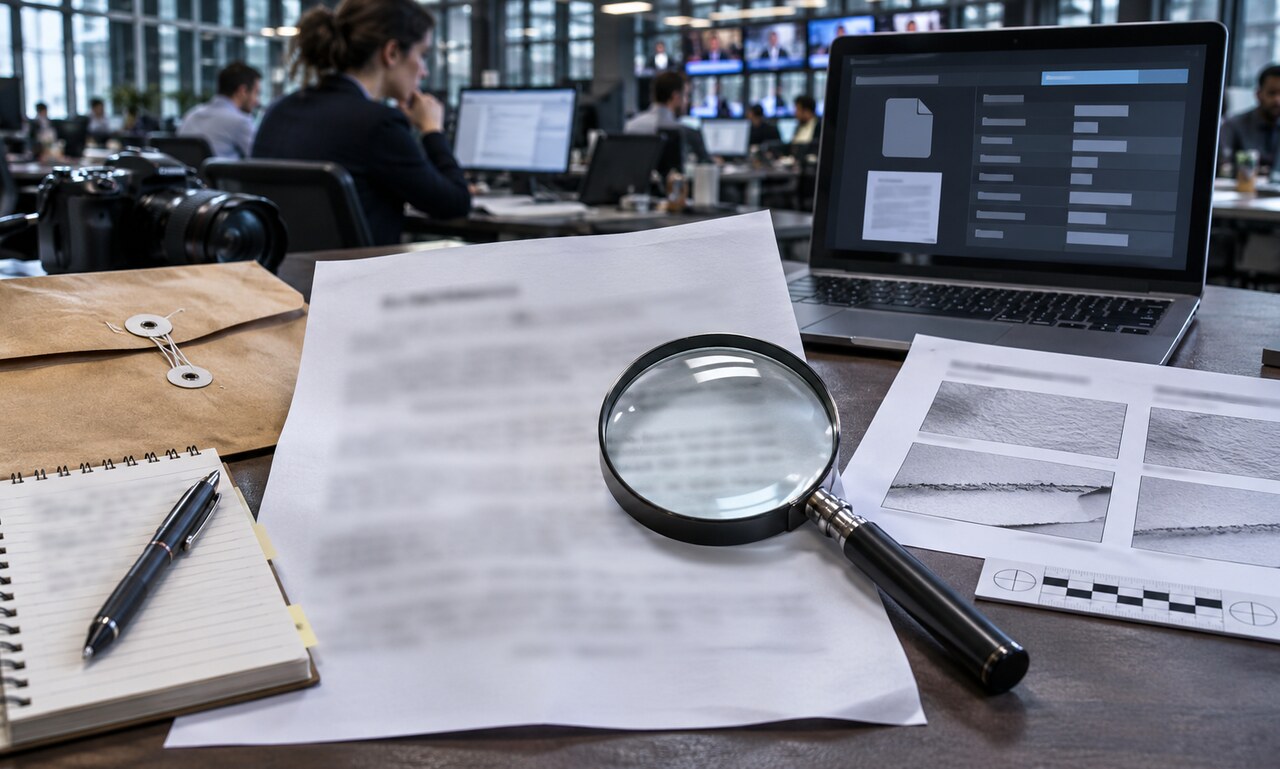
Examine the file itself. Metadata, page numbering, headers, signatures, formatting and revision history may provide clues about when and where it was produced. None of these features is decisive alone; a convincing fake can copy a familiar template.
Compare the document with known records from the same organization. Language, job titles, distribution lists and internal procedures should fit the claimed time period. Contact people who can recognize the system or process without revealing more of the source than necessary.
Completeness matters. A single page may omit conditions, appendices or later changes that reverse its apparent meaning. Ask for the original file and surrounding material, then distinguish a draft, proposal, decision and final policy in the reporting.
Only after authentication should interpretation begin. State what has been verified, explain important gaps and avoid presenting the source’s description as proof. A leak is a route to evidence, not an exemption from checking it.
Original educational commentary by Breaking Click. This explainer is designed to help readers evaluate information more carefully.